
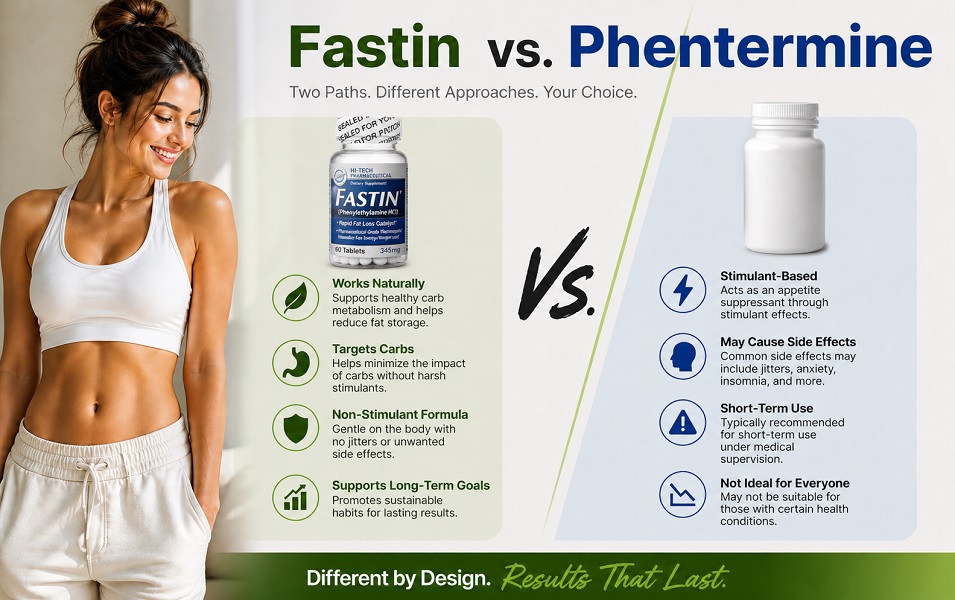
The world of weight loss aids is often filled with confusingly similar names and overlapping claims. One of the most common points of confusion is the relationship between Fastin (by Hi-Tech Pharmaceuticals) and the prescription drug Phentermine. While they share a historical name, their chemical profiles, legal statuses, and stimulant mechanisms are distinct.
The Historical Link and Modern Disconnect
To understand the difference, you must first look at the name’s origin. “Fastin” was originally a brand name for prescription Phentermine hydrochloride, manufactured by King Pharmaceuticals. When that brand was discontinued, Hi-Tech Pharmaceuticals acquired the trademark and repurposed it for an over-the-counter (OTC) dietary supplement.
Consequently, modern Fastin by Hi-Tech Pharmaceuticals is a dietary supplement available without a prescription, whereas Phentermine remains a Schedule IV controlled substance available only by prescription for short-term obesity management.
Stimulant Mechanisms: How They Work
Both products rely on central nervous system (CNS) stimulation to suppress appetite and increase energy, but they use different “chemical engines” to achieve these effects.
1. Phentermine: The Sympathomimetic Amine
Phentermine is chemically related to amphetamines. It works primarily by triggering the release of norepinephrine (and to a lesser extent, dopamine and serotonin) in the hypothalamus. This simulates a “fight or flight” response, which signals the brain to suppress hunger while simultaneously increasing heart rate and blood pressure. It is designed for clinical supervised use due to its potent CNS effects and potential for habit formation.
2. Fastin (Hi-Tech): The Multi-Stimulant Blend
Hi-Tech’s Fastin utilizes a proprietary blend of alkaloids and botanical extracts. Its primary stimulant component is Phenylethylamine HCl (PEA). PEA is often referred to as the “feel-good” neuromodulator because it promotes the release of dopamine and norepinephrine, leading to rapid increases in focus and “explosive” energy.
According to Hi-Tech, their formula (which often includes Methylsynephrine, Theobromine, and Yohimbine) mimics the effects of endogenous catecholamines like epinephrine. These ingredients are often combined with Caffeine Anhydrous to provide a sustained thermogenic effect, increasing resting energy expenditure by up to 22% in some company-funded studies.
Key Differences at a Glance
| Feature | Prescription Phentermine | Fastin (Hi-Tech Pharmaceuticals) |
| Classification | Schedule IV Controlled Substance | Dietary Supplement |
| Active Ingredient | Phentermine Hydrochloride | Phenylethylamine HCl & Alkaloids |
| Availability | Prescription only | Over-the-counter |
| Primary Goal | Clinical appetite suppression | Energy, thermogenesis, and fat loss |
| Typical Side Effects | Dry mouth, insomnia, nervousness | Rapid heartbeat, jitters, high BP |
Safety and Side Effects
Because both are powerful stimulants, they share a similar side effect profile related to CNS overstimulation. Users of both products frequently report tachycardia (fast heart rate), elevated blood pressure, insomnia, and restlessness.
Phentermine carries risks of psychological dependence and “psychotic episodes” if abused at high doses.
Fastin (Hi-Tech) contains potent alkaloids like Yohimbine, which can cause intense jitters or anxiety in sensitive individuals. Historically, the FDA has monitored Hi-Tech’s formulations closely, notably seizing products in 2013 over the inclusion of DMAA, an ingredient the agency deemed unsafe.
Conclusion
While Phentermine is a medically regulated drug focused primarily on blocking hunger signals, Fastin by Hi-Tech is a multi-stimulant supplement designed for those seeking high energy and thermogenic “fat-burning” effects. Neither is a “magic pill,” and both are intended to be used as tools alongside a reduced-calorie diet and regular exercise.
Health Warning: Always consult a healthcare provider before starting either. Stimulants can place significant stress on the cardiovascular system and may interact poorly with medications like antidepressants or blood pressure treatments.